

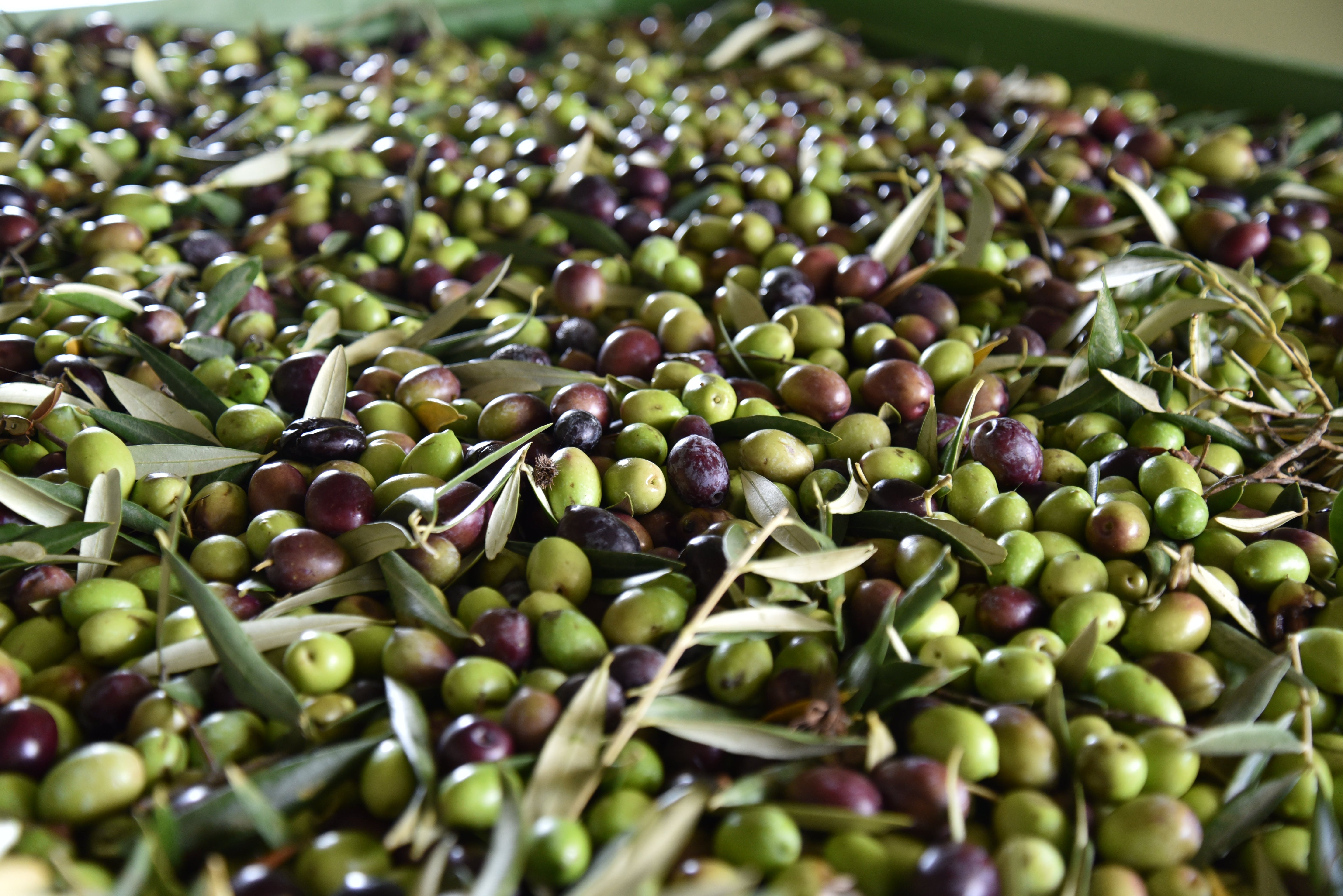
Harvest to Mill: Why Timing Quietly Shapes EVOO Quality
1. What Happens After Olives Are Harvested (a short thriller in three acts)
The moment olives are picked, three things begin, silently, invisibly, relentlessly.
Oxidation
Oxygen starts nibbling away at flavours, colour and stability.
Fermentation
If olives are left warm or piled up, microorganisms begin doing what microorganisms do: ferment.
This is… less than ideal.
Heat
Large piles generate heat. Warm olives = faster degradation.
Think of it as nature’s slow cooker, but in the worst possible way.
Polyphenols quietly escape
Polyphenols don’t enjoy stress.
Time and heat encourage them to leave early, long before the mill even starts.
In short: the clock is not your friend.
2. The Flavour Defects Nobody Wants (but everyone should know)
When olives wait too long, they start to complain and those complaints become detectable in the oil.
Reheating
Caused by olives stored in large piles for too long.
Smells like warm, cooked fruit. Nobody buys EVOO for that.
Fusty / Winey-Vinegary
Poor storage creates excessive ethanol and acetic acid.
The result? Notes reminiscent of a forgotten wine cellar.
Mouldy-Humid
Moisture + time = mould.
Once these compounds form, they settle into the oil permanently.
Rancid
Oxidation gone too far.
Flat, stale, cardboard-like. The sensory equivalent of a tired sigh.
And the quiet tragedy: antioxidant loss
Delayed milling dramatically reduces polyphenols, aroma volatiles and beneficial compounds.
3. About That 24–48 Hour Standard…
The 24–48 hour rule is a bit like saying:
“Yes, you can make bread tomorrow… and it will still technically be bread.”
It won’t be bad, but it won’t be transcendent either.
Most producers follow this window because it is logistically practical.
But when you taste an oil made quickly, you understand instantly what timing does:
• greener aromas
• brighter flavours
• more energy
• more polyphenols
• fewer defects
Time doesn’t destroy quality all at once, it erodes it quietly.
4. Our Advantage: Our Family’s Mill
We’re fortunate.
The mill where we process our olives is our family’s mill, a modern, eco‑friendly facility that gives us immediate milling access.
No waiting in line.
No transportation delays.
No piles of olives sitting around.
No compromises on timing.
This rare level of control allows us to mill our olives within **8 to 15 hours**.
And when temperatures run high, our family’s mill includes **large refrigerated cellars** that gently cool the olives before extraction.
Cooling prevents:
• heat‑induced oxidation
• early fermentation
• polyphenol loss
• unnecessary stress on the fruit
It’s like pressing the pause button on degradation, a quiet but powerful way to preserve quality.
5. Technology That Protects Flavour (and Why Water-Free Milling Matters)
Our mill uses a cutting-edge, temperature‑controlled extraction system that operates without adding water.
Water can dilute aromas and wash away polyphenols.
Combined with refrigerated cellar storage, this system ensures the fruit:
• stays cool
• stays stable
• stays structurally intact
from arrival to extraction.
Fresh olives + rapid milling + controlled temperature + advanced extraction
= oil that remains vibrant for much longer.
6. What Faster Milling Means in the Bottle
More freshness, green, herbaceous notes that jump out of the glass.
More polyphenols, bitterness and pepperiness that feel alive.
More purity - clean flavours, no muddiness.
More personality - a clearer expression of the cultivar and the land.
More stability - freshness that lasts all year.
Timing is not just a production detail it is a sensory decision.
Conclusion
Every olive has a story, and how quickly it reaches the mill decides how that story will be told.
Milling within 8–15 hours isn’t marketing,
it’s a quiet commitment that changes everything:
• how the oil tastes
• how it ages
• how honestly it expresses the land
When you treat fruit gently and work quickly, the oil doesn’t just taste good
**it tastes alive**.
%0AThe%20moment%20olives%20are%20picked,%20three%20things%20begin,%20silently,%20invisibly,%20relentlessly.%0A%C2%A0%0AOxidation%C2%A0%20%0AOxygen%20starts%20nibbling...)