

Organic Certification and Extra Virgin Olive Oil: What It Means for Quality
Organic certification inspires trust. It signals respect for the land, responsible farming, and mindful agricultural choices. However, organic certification describes how olives are grown , not how the extra virgin olive oil (EVOO) is produced. This distinction is where true quality emerges.
What Organic Certification Guarantees
Organic certification regulates agricultural practices in the olive grove. It ensures that olives are cultivated without synthetic pesticides or fertilizers, supports biodiversity, and promotes transparent farming methods.
These principles are important for sustainable agriculture. However, organic standards primarily address cultivation, not the technical process that transforms olives into extra virgin olive oil.
Harvest timing, milling speed, extraction methods, and temperature control are not defined by organic rules alone.
What the Organic Label Does Not Explain
Two certified organic extra virgin olive oils can taste completely different.
One EVOO may be vibrant, fresh, and intensely green. Another may appear muted or less expressive. Organic certification does not disclose:
-
Harvest date
-
Time between harvest and milling
-
Oxygen management
-
Extraction temperature
-
Filtration decisions
-
Storage conditions
These technical factors directly influence freshness, flavour clarity, polyphenol content, and shelf life.
Organic Farming Protects the Land - Craft Defines Excellence
Organic farming supports environmental responsibility, but exceptional extra virgin olive oil depends on precision and craftsmanship.
Key elements that shape high-quality EVOO include:
-
Early harvest timing
-
Fruit integrity
-
Rapid milling after harvest
-
Controlled extraction temperature
-
Minimal oxygen exposure
-
Thoughtful filtration
An organically grown olive left unprocessed for too long will deteriorate, just like any other. Conversely, carefully handled olives — organic or not — can produce outstanding extra virgin olive oil when processed with expertise.
Excellence in EVOO is the result of technique.
The Mill: Where Extra Virgin Olive Oil Takes Form
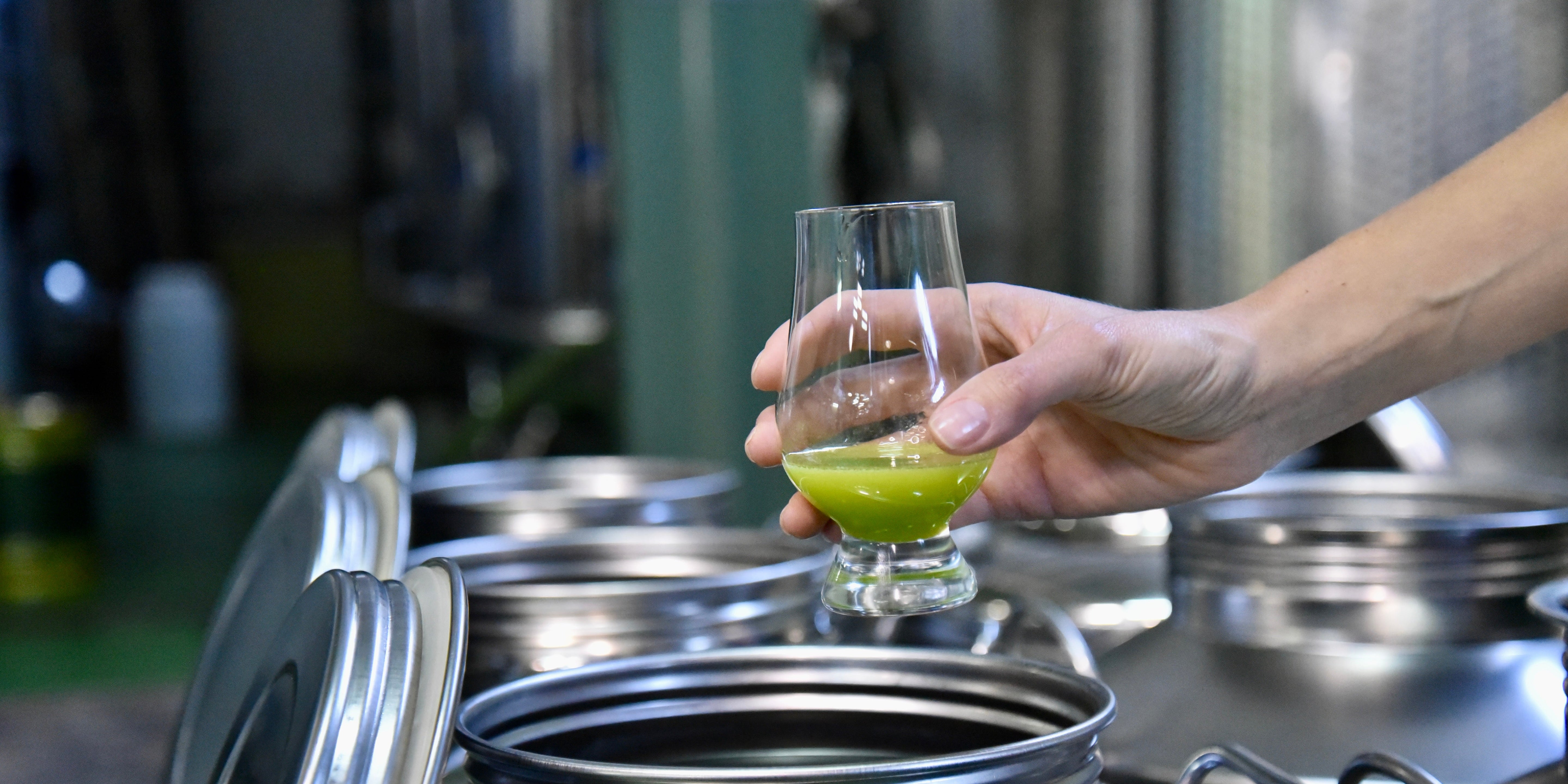
The mill is where olives become extra virgin olive oil.
Extraction temperature, oxygen control, hygiene, gentle handling, and filtration all influence flavour, aroma, stability, and longevity.
While organic certification requires compliance throughout the production chain, it does not govern these technical decisions. This is why organic EVOOs vary significantly in quality.
Certification protects the process. Craftsmanship defines the oil.
Why Not All Exceptional EVOOs Are Organic
Some outstanding extra virgin olive oils may not carry organic certification due to regional conditions, pest pressure, or the time required to complete certification procedures.
The absence of an organic label does not necessarily indicate a lack of environmental responsibility. In some cases, producers may follow sustainable practices without formal certification.
Quality and sustainability are related - but not identical.
What Defines a Truly Great Organic Extra Virgin Olive Oil (EVOO)
A superior organic EVOO emerges when responsible farming and advanced production techniques work together.
Early harvesting, rapid milling, water-free or low-water extraction, precise temperature control, and careful filtration allow organic olives to fully express their aromatic potential.
When these elements align, the result is an extra virgin olive oil that is:
-
Fresh
-
Balanced
-
Rich in natural polyphenols
-
Stable over time
-
Expressive in flavour
Tenute Cristiano’s Approach
At Tenute Cristiano, sustainability guides every decision.
Organic farming reflects our values, but excellence is never the result of a single certification. Early harvesting, milling at our family-owned mill, water-free extraction, strict temperature control, and thoughtful filtration allow us to produce extra virgin olive oils that are both responsible and exceptional.
For us, organic certification is a foundation, not the finish line.